
What Does It Mean to “Prove” Croatian Ancestry?
Knowing that your grandfather was Croatian and proving it through official records are two different things.
For citizenship purposes, family stories provide an invaluable starting point, but documentary evidence is generally required.
Think of it as building an evidence chain.
If your great-grandmother was the Croatian emigrant, for example, you may need records connecting:
Your great-grandmother → your grandparent → your parent → you
Birth and marriage records are particularly important because they can establish relationships between generations and explain changes in Last Names.
Croatia’s Ministry of the Interior states that descendants of emigrants should provide proof that they are related to the emigrant. Evidence proving the ancestor’s emigration from Croatian territory is also required for this citizenship pathway.
That means the objective isn’t simply to find a Croatian document.
It’s to create a clear documentary trail connecting your story to theirs.
1. Start With What Your Family Already Knows
You don’t necessarily need to begin in an archive.
Start at home.
Speak with parents, grandparents, aunts, uncles and older relatives and record everything they remember.
Try to establish:
- Full names and maiden names
- Approximate dates of birth
- Birthplaces or villages
- Marriage details
- Religious affiliation
- Names of parents and siblings
- Approximate date of emigration
- Country and city of arrival
- Alternative spellings of Last Names
Then look through the family documents that have survived.
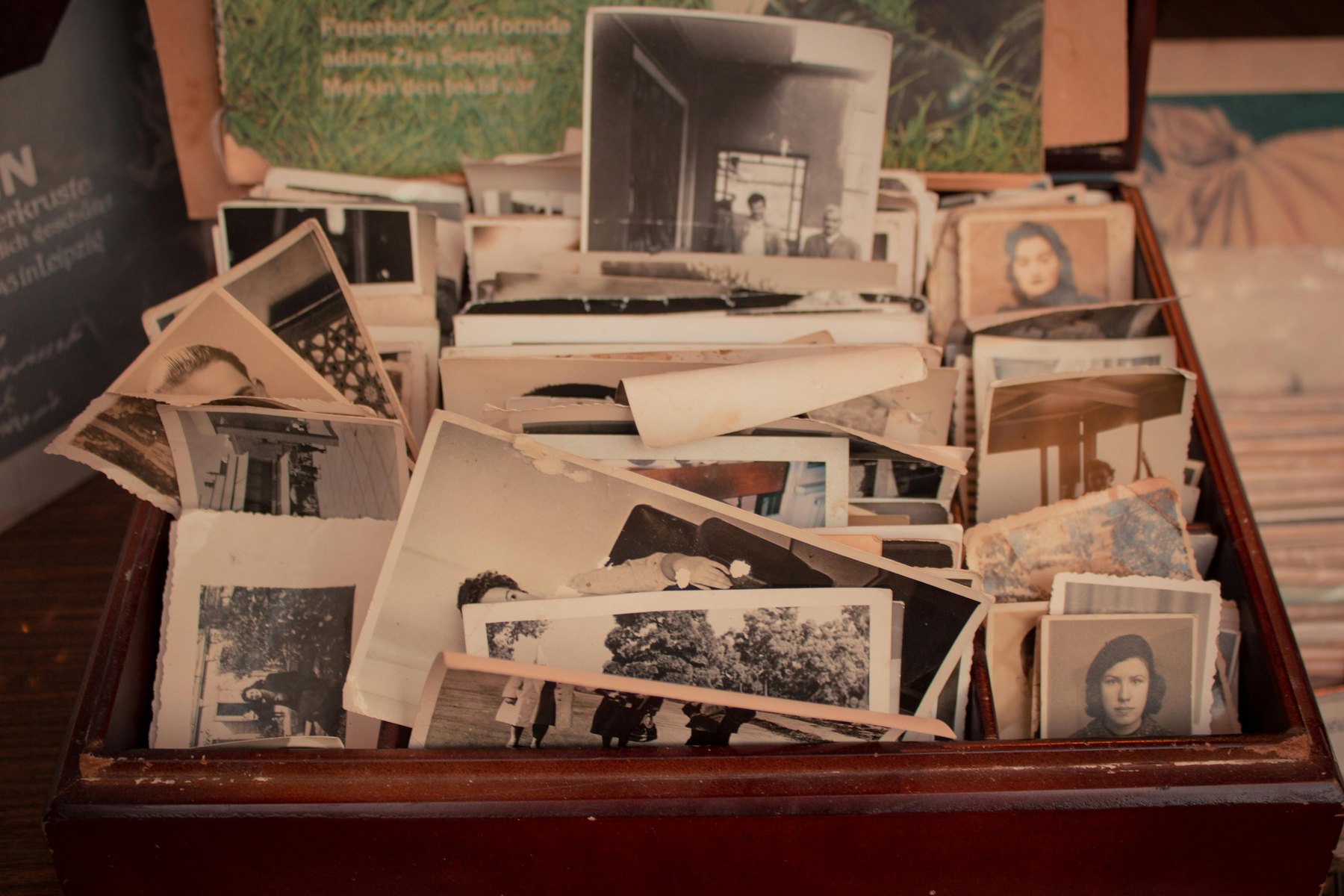
Old passports, birth certificates, marriage records, letters, photographs, military papers and immigration documents can all contain clues.
This isn’t just our recommendation. The Croatian State Archives advises genealogy researchers to begin by gathering names, Last Names, dates and places from relatives and older family documents before beginning archival research.
Sometimes a single village name written on the back of an old photograph can transform a search.
2. Build Your Family Tree – One Generation at a Time
Once you know the likely Croatian ancestor, create a simple family tree showing the direct line between that person and you.
Don’t worry about tracing every distant cousin.
For citizenship research, the priority is establishing the relevant ancestral line.
For example:
Croatian great-grandfather
↓
Grandmother
↓
Father
↓
You
Then identify which records you already possess for each person.
Ideally, names, dates and relationships should remain consistent across the documentary chain.
In reality, they often don’t.
Names may have been translated or anglicized after emigration. Last Names can appear with different spellings. Women may appear under maiden and married names. Dates can even differ between records.
These inconsistencies don’t necessarily end the search – but they do need to be understood and, where required, documented.
3. Find Your Ancestor’s Croatian Birthplace
Knowing where your ancestor came from can be just as important as knowing their name.
Croatia has undergone significant political and administrative changes over the past two centuries. Depending on the period, historical records may have been created under different administrations or written in different languages.
Your ancestor may also have described their birthplace as:
- Croatia
- Dalmatia
- Istria
- Slavonia
- Austria-Hungary
- Yugoslavia
This is where historical context matters.
The Croatian State Archives recommends researching the history of an ancestor’s place of origin – including the administrative area and parish to which it belonged – because this can help identify where surviving records are held.
If all you have is a village name, that’s still a valuable clue.
4. Search Croatian Civil and Parish Records
Once you have established a likely place and approximate date, the search can move into Croatian records.
The Croatian State Archives holds extensive genealogical collections, including registers of births, marriages and deaths. Its collections include records dating from the 17th through the 20th centuries.
Parish records can be especially valuable for earlier generations.
Depending on the period and location, these may record:
- Births and baptisms
- Parents’ names
- Marriages
- Deaths and burials
- Places of residence
- Religious affiliation
The Croatian State Archives is an important starting point for genealogical research. Its collections include registers of births, marriages and deaths, as well as numerous other archival collections that can help trace Croatian family histories. The Archives also provides guidance on identifying where relevant records are held.
Digitized Croatian church records are also available through online resources and directories, whose Croatian collection includes Roman Catholic, Orthodox, Greek Catholic, Jewish and other religious records alongside some civil and military registers.
Not every record is online, however. Sometimes finding the answer still means identifying the right Croatian archive, registry office or parish.
5. Find Evidence of Emigration
If you’re pursuing Croatian citizenship as a descendant of an emigrant, proving the Croatian side of the family tree is only part of the picture.
You may also need to establish when and how your ancestor emigrated.
Depending on your family’s history, useful evidence might include:
- Historical passports
- Passenger or ship records
- Immigration documents
- Naturalization certificates
- Employment or military records
- Other official records demonstrating emigration
Croatian authorities specifically identify evidence of emigration as relevant to applications by emigrants and their descendants. Where an ancestor emigrated from territory belonging to former states that included present-day Croatia, additional evidence concerning the timing of emigration and Croatian affiliation may be required.
This is one reason Croatian citizenship research can become more complex than simply finding an ancestor’s birth certificate.
6. Connect the Croatian Records to Your Overseas Records
Now the two sides of the story need to meet.
Imagine your great-grandfather Ivan was born in Croatia but appears as John after arriving in the United States, Australia, Canada or South Africa.
How do you establish that Ivan and John were the same person?
You look for connections.
Dates of birth. Parents’ names. Spouse. Place of origin. Immigration date. Children. Addresses. Naturalization records.
The objective is to build a coherent documentary trail across countries and generations.
This is particularly important for diaspora families whose records may now be spread across Croatia and countries such as the United States, Australia, Brazil and South Africa.
The paperwork may have traveled thousands of kilometers.
The family story connects it.
7. Check Translation, Certification and Legalization Requirements
Finding the correct document doesn’t necessarily mean it is immediately ready for a citizenship application.
Croatia’s Ministry of the Interior states that foreign public documents submitted with a citizenship application may need to be legalized unless an applicable international agreement provides otherwise. Depending on the issuing country and circumstances, an apostille or another form of legalization may therefore be required.
Translations into Croatian may also be necessary.
Requirements vary according to the document, issuing country and basis of the application, so this is an area where it’s particularly important to check current official requirements before preparing your final application.

What If You Can’t Find Your Ancestor’s Records?
Don’t assume the journey ends there.
Old records may be:
- Held in a regional rather than national archive
- Recorded under another spelling
- Listed under a historical place name
- Preserved in a parish register
- Stored in another administrative collection
- Available only on microfilm or in an archive reading room
The Croatian State Archives itself notes that genealogical sources are distributed across numerous archival fonds and collections – not necessarily held together in one convenient location.
This is where experienced genealogical research can make a significant difference.
Sometimes the breakthrough isn’t finding a record immediately.
It’s knowing where else to look.
The Benefits of Working with a Specialist
Tracing your Croatian ancestry can be an incredibly rewarding experience. But it can also be time-consuming, particularly when records are difficult to locate, names have changed or your family’s history stretches across multiple countries and generations.
This is where working with experienced genealogical researchers can make a real difference.
Specialists with in-depth knowledge of Croatian genealogy understand the country’s historical records, regional archives, parish registers and changing administrative boundaries. They know where to look, how to interpret unfamiliar documents and how to follow clues that might otherwise lead to a dead end.
Working with a Croatia-based specialist such as Salona Consulting can offer several important advantages:
- Local knowledge and connections: Familiarity with Croatian archives, institutions and research processes can help identify and access records that may be difficult to locate from overseas.
- Historical and linguistic expertise: Understanding older Croatian documents, historical place names and variations in surnames can help connect records that initially appear unrelated.
- A more efficient research process: Experienced researchers can focus on the most promising sources, potentially saving months of independent searching.
- A clearer documentary trail: For those exploring Croatian citizenship by descent, specialists can help identify gaps in the evidence connecting each generation and determine which additional records may be needed.
- Guidance beyond genealogy: Working with a team familiar with both ancestry research and Croatian citizenship procedures can make the transition from discovering your roots to exploring citizenship eligibility considerably smoother.
At Salona Consulting, we combine genealogical research expertise with on-the-ground knowledge of Croatia, helping clients navigate complex family histories and uncover the documents that connect them to their Croatian ancestors.
Of course, not every family history requires professional assistance. Some ancestral connections are relatively straightforward to trace independently. But when the search becomes complicated, having someone who understands the records, the history and the local research landscape can make the journey far less daunting.
And often, the value goes beyond finding a missing certificate. It’s about uncovering the people, places and stories behind the documents – and bringing a family’s Croatian heritage back into focus.
More Than a Paper Trail
For citizenship purposes, genealogical research has a practical objective: evidence.
But that is rarely the whole story.
A search for a birth certificate can reveal the village where your great-grandmother grew up.
A parish register can reveal names your family hasn’t heard for generations.
An emigration record can tell you when an ancestor left Croatia to begin a completely new life in Australia, Brazil, South Africa or the United States.
Documents that initially look like bureaucracy can become fragments of a much bigger family story.
That is why, at Salona Consulting, we see genealogy as more than simply proving eligibility.
It is a way of reconnecting people with a living heritage – the places, people and journeys that shaped their family long before citizenship became the goal.
Where Should You Start?
Start with what you know.
Write down the oldest Croatian ancestor you can confidently identify. Speak to relatives. Gather the documents already in your family. Establish names, dates and places.
Then work backwards – and forwards – one generation at a time.
You don’t need to know your entire family history before beginning.
Sometimes all it takes is a Last Name, a date or the name of a village to open the first door.
At Salona Consulting, we combine genealogical research with practical citizenship guidance, helping clients trace the documentary path from their Croatian ancestors to the present day.
Because proving your Croatian ancestry isn’t simply about establishing where your family came from.
It’s about rediscovering the journey that connects their story to yours.
Frequently Asked Questions
What documents can prove Croatian ancestry?
Birth, marriage and death certificates are often central because they establish relationships between generations. Croatian civil or parish registers, historical passports, citizenship documents and emigration records may also provide important evidence.
The exact documents required depend on your family’s circumstances and the legal basis of a citizenship application.
Can I prove Croatian ancestry through my grandparents?
Potentially, yes. If your citizenship pathway depends on descent from a Croatian emigrant, you will generally need documentary evidence connecting you to that ancestor. Croatian authorities specifically require descendants of emigrants to prove that family relationship.
What if I only know my ancestor’s Last Name?
A Last Name can be a useful starting point, but additional information – particularly a birthplace, approximate birth date, relatives’ names or emigration – destination can make genealogical research considerably more effective.
What if my Croatian ancestor’s name changed after emigrating?
Name changes and spelling variations are common in historical family research. The aim is to find records containing enough matching information to establish a consistent connection between the person recorded in Croatia and the person appearing in overseas record.
Are Croatian genealogy records available online?
Some Croatian genealogical material can be researched online, but not every record has been digitized or made publicly accessible. The Croatian State Archives provides information about its genealogical collections and can help researchers identify where particular birth, marriage and death registers are held. Other digitized Croatian records are also available through genealogy platforms such as FamilySearch.
Do I need a genealogist to prove Croatian ancestry?
Not necessarily. Some family histories are relatively straightforward and can be researched independently.
Others involve missing documents, historical border changes, unfamiliar archives, multiple Last Name variations or records spread across several countries. Professional genealogy support can be particularly valuable when the documentary trail becomes difficult to follow.

Andrew Murray
Marketing & Growth Specialist | Salona Consulting